
Novel
In this section we present our english translation of ‘Jesus of Nazareth’. It is the first such translation of this unique novel.
In the days of Herod, King of Judaea
Herod awoke at dawn and summoned Trypho the barber, who had been in his service for many years and who – knowing his master’s capricious way of life – had always been ready, regardless of the time of day or night, to answer his every call; and he was even able to conform his nature to the demand of faithful and constant vigilance, so that even when awaken from his sleep – and it was not really sleep, but rather a torpid vigil – Trypho could instantly answer every royal command, and do so with clarity and vigor. So only a few moments had passed until the barber appeared and began to rub the oil into the king’s cheeks; the king, lost in thoughts, closed his eyes, tired after the last night’s bad sleep, and, having tilted his head back, he was trustfully offering his neck to the hands and to the razor of the loyal servant.
He was used to considering his personal matters while being shaven, as the monotonous motions of the brush, and the scent of the nard-infused oil were spurring his imagination, so sensitive to all external stimuli. This time, he pondered – with utmost attention – the dream that, after many years, came to haunt him yet again tonight.
He was standing there by the sea, looking at the abyss filled with surging waves of dead heads, crashing in a violent tide against the flat shore. As he leaned over them, he recognized – in this shoal of skulls covered with yellow, parchment-like scalps – those of the high priest Aristobulus, his wife Mariamne, his mother-in-law Alexandra, of the murdered courtiers, confidants, and servants.
The sea, stretching to the far horizon, rocked, roared, and rolled in high waves, restless and angry. He plunged his hands into this force of nature and took one head out, then another, a third, a fourth – placed them on the sand and began to examine them carefully; and the longer he stared into the empty eye sockets, the greater was the dread overwhelming him, for although each of them had its own features, they also had the features of his face, so he did not know whether he was looking into someone else’s face or into his own. Screaming, he threw the skulls back into the sea. And, as they floated away, they sang a solemn song with words that, despite his intense listening and heightened attention, he could not understand; and he knew in those sweet and alluring words the entire destiny of his life was hidden; and so, wiled by their incomprehensible and siren-like speech, he followed them into the sea, everdeeper and stormy.
He woke up screaming.
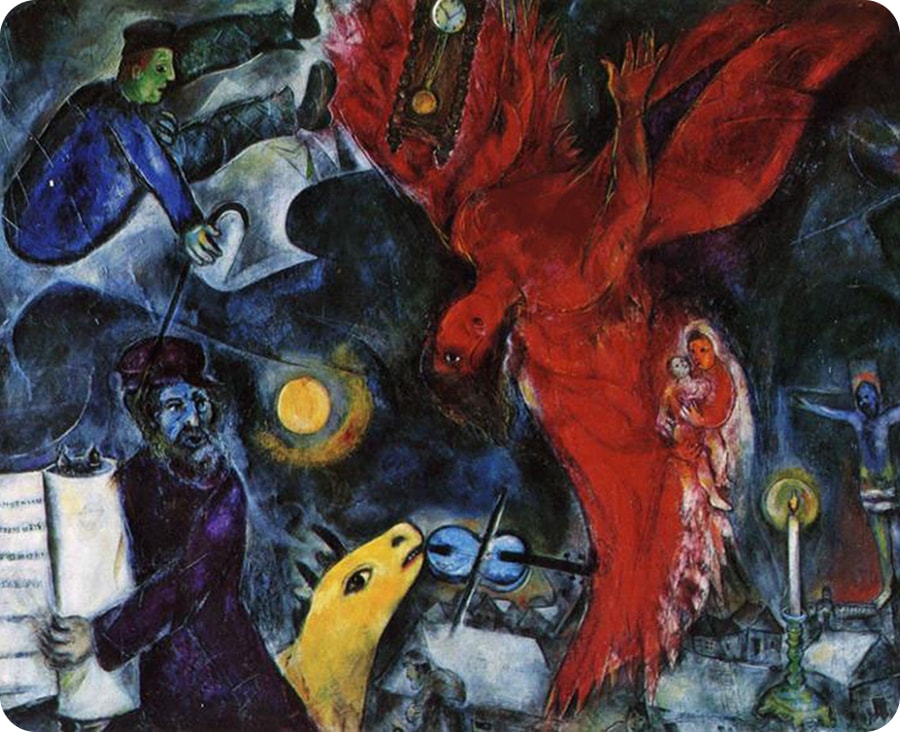
The dream had been troubling the king for many years, at irregular intervals. At first, he wanted to conceal it from his dream interpreter, but after some deliberation, the rational wish to find out what the eerie skulls were singing about prevailed. Hence, he suspected the unclear singing to be concealing some sort of a threat, which was not very hard to guess, by the way, as, except for the song itself, the meaning of the dream was embarrassingly clear. The interpreter, having learned its contents, revealed to the king that the skulls were singing an augury song of a danger threatening him from his sons, who one day, when they become young men, will take aim at his life.
Alas, the interpreter was unable to tell which of the king’s numerous sons the singing skulls had in mind. Herod told the boys his dream with disarming sincerity, but he concealed some details, added some, removed others, and through these cautious maneuvers slightly changing its meaning, he tried to arouse in their minds the fear of the fate of those who would one day suffer the punishment they deserved for their perfidious plots and conspiracies. And so, by frightening boys from childhood with his nightmare, he believed that he would succeed in instilling in their hearts submission, blind obedience and admiration for all his deeds, undertakings, and actions.
Though the boys trembled with fear listening to their father’s story, it turned out that these pedagogical measures had not prevented the tragedy. A few years back, Herod, harboring some delusional – or perhaps warranted – suspicions, wiped out two of his sons, born of the unfortunate and tenderly mourned Mariamne. From then on, the dream of singing skulls had not returned for many years. Until suddenly that night, it came to haunt him again in all its horror and tormenting splendor. The king understood its wise meaning. This time the skulls undoubtedly sang a song about the firstborn Antipater, born of Doris the Idumean, an ambitious and unscrupulous lad upon whom the suspicious gaze of Herod had been impatiently fixed for quite some time.
Meanwhile, the razor of the skillful Trypho flowed down the king’s jowl. While shaving the royal chin, the old barber felt like a lumberjack putting his axe to the roots of an oak. He knew that the fate of the kingdom now rested in his hands and that one dextrous motion of the razor would be enough for the royal head, severed from the torso, to start jumping on the ground in convulsive tremors. Terrified by such vision – the very fact that he dared to evoke it in himself in such an intimate proximity of the ruler filled him with trembling and fear – he quickly withdrew the razor from Herod’s throat, who, wiping his smooth cheeks with a towel, said approvingly:
– You haven’t cut me today, dear Trypho.
