
Novel
In this section we present our english translation of ‘Jesus of Nazareth’. It is the first such translation of this unique novel.
The Incident Before The Altar of Incense
At the same time as Herod was wiping his face with a towel, Zechariah, a priest from Abijam’s shift, arrived in Jerusalem after several hours of journeying on his faithful donkey, Midbar. He’d left his home in Ein Karem at midnight, hoping to be in time for the opening of the gates of the Temple of the Lord at dawn – his spirit was always deeply moved by the Levites’ calls announcing the sunrise from the temple towers – where he was to begin his divine service on the next day, to the glory of the Invisible One. He felt brisk and vigorous. Before the city, he dismounted his donkey and, as a sign of his profound reverence for Jerusalem, walked the route from the valley upwards to the city without much fatigue, despite his advanced age. He entered the city center through the Garden Gate, left Midbar with the caretaker at Xystos, and proceeded to the Court of the Gentiles, a wide square that served as a place of commerce, meetings, and strolling for Jerusalemites and visitors from all over the country.
It was here that the faithful gathered early in the morning, waiting for the beginning of prayers and offerings. It was here that, in the court and under the adjacent porticoes, amidst the noise, bustle, conversations, bargains and calls, the merchants of goats, sheep, pigeons and turtledoves, the sellers of frankincense, myrrh and aloes bustled; they called to each other unnecessarily, only to increase the general uproar, for they felt in it like fish in the flow of the roaring element; and here were the money changers, who not only exchanged Greek, Roman and Egyptian money for temple shekels – donations to the treasuries could be made only in shekels – but also concluded profitable contracts with the sacrificers, granting them loans, often at high interest, even though the Torah repeatedly condemned usury – ribith – and threatened usurers who charged high interest with severe penalties.
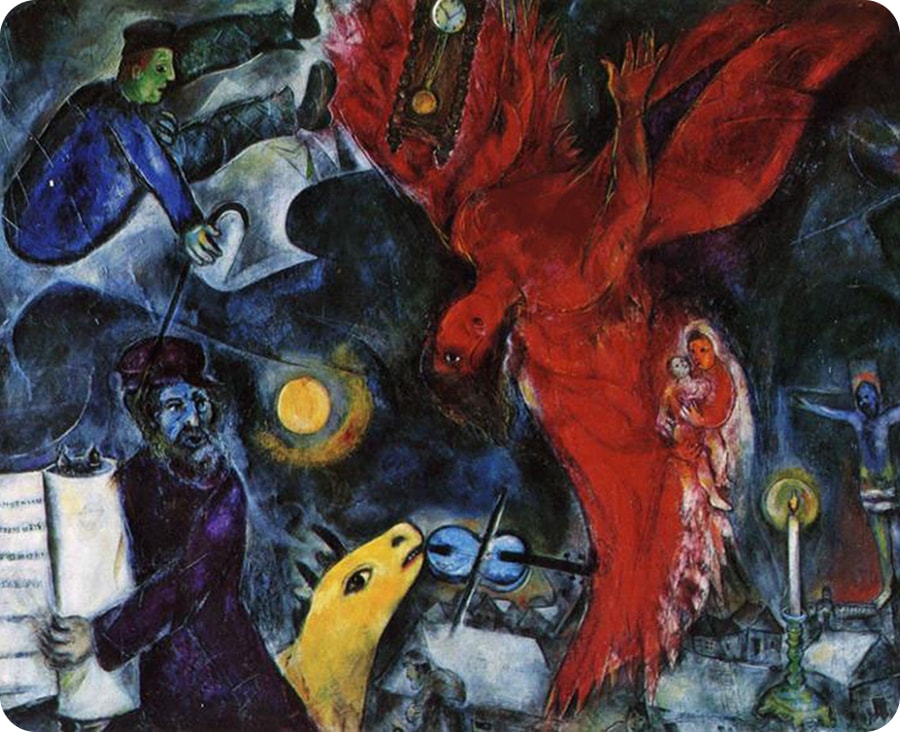
Zechariah felt a gnawing anxiety in his heart. It seemed to him that his prayers, offered at dawn, had been cold and empty, and therefore had certainly found no favor in the presence of the Lord. He often experienced such moods, despite his deep and fervent faith. Powerless to overcome them, as he felt his ability to pray diminish, he ceased to put into words the feelings boiling within him and only silently tried to express his love and devotion to the Eternal One in his soul. But he was never sure if he succeeded, especially since this peculiar contemplation was more the fruit of bitter spiritual impotence than a conscious striving for unity with the Lord of Hosts. Right now, such a difficult moment came upon him again. He stood before the Altar of Burnt Offering, took the burning coals in his tongs, and threw them into the censer. Then, accompanied by a young Levite, who was pouring a handful of amber, powdered myrrh, and aloes onto the embers, he went before the Altar of Incense, built of acacia wood and covered with gold leaf. Its four corners were adorned with golden horns, symbols of the Lord’s omnipotence. Zechariah stopped at each corner of the altar and swung the incense stick with a pendulum motion, which released silver smoke to fill the temple interior. It seemed to the old man that the incense clouds formed the shape of a human figure. At first, he thought it was an illusion, but as the phenomenon grew more and more distinct – the shape of the head, torso, arms, and legs emerged, somewhat blurred and out of focus, as if a reflection of a man in rippling water, but nevertheless distinct enough to be described as a human form – the priest understood that he was just witnessing some incomprehensible mystery, and thus he trembled with great tremors. And when he finally heard the voice, he was so surprised by it that he was not sure whether it spoke from the cloud through the mouth of the incense-drawn figure, or whether it came from a large distance, and the figure of the smoke billowing before him was only the guardian of that voice; or perhaps not the guardian of the voice, for why would EI Shaddai – he had been certain from the first moment that it was EI Shaddai’s voice – have any need for a guardian of the voice? so perhaps it was rather his own guardian, a guardian of the poor old Zechariah, ensuring that the man understood everything clearly and unambiguously. But he was so terrified by everything flowing through him and everything happening before his eyes that he struggled to grasp the meaning of the words.
Zechariah felt a poignant angst in his heart. It seemed like the prayers he said at dawn were cold and hollow, and so they certainly did not find favor before the Lord. He experienced such moods often, despite his deep and fervent faith. Unable to fight them off, whenever he sensed his ability to pray becoming weaker and weaker, he would cease to dress these surging feelings in words and instead try to show the Ancient of Days his love and affection only with his silent inner life. But he was never sure if those attempts were successful, especially that this peculiar contemplation was a result of a bitter impotence of spirit more than of a conscious striving towards the union with the Lord of Hosts. Now, one such hard time came over him again. He stood before the Altar of Burnt Offering, grabbed some hot coals with his tongs and threw them into the censer, and then, together with a young Levite, who was sprinkling a handful of amber, powdered myrrh and aloe vera on the embers, Zechariah went to the Altar of Incense, built of acacia wood, covered with gold sheets. Its four corners were decorated with golden horns, the symbols of the Lord’s omnipotence. Zecharia paused at each of the corners to sway the censer in a pendulum-like motion, the incense bursting with silver smoke and filling the interior of the temple. And it seemed to the old man like the clouds of smoke were arranging themselves into the shape of a human. At first he thought it was an illusion, but as the mirage became clearer – the shape of the head, torso, arms and legs was drawn, although somewhat blurred and stirred, as if it was a reflection of a man in rippling water, yet still clear enough to be described as a human form – the priest comprehended he was becoming a witness to a mystery incomprehensible to him, and so he trembled with great trembling. And when he finally heard the voice, he was so surprised by it he wasn’t even sure if it was coming from the lips of the incense figure, or was the figure more like its guardian with the voice itself coming from some distant space. But why would El Shaddai need a guardian for His voice? (and Zechariah was instantly certain it was El Shaddai’s voice). So maybe the figure was more like a guardian to him, poor old Zechariah, a guardian making sure he understands everything unambiguously and clearly. Yet he was so terrified by all he had heard and by what was happening before his eyes that he could hardly grasp the meaning of the words.

“Do not be afraid, Zechariah,” spoke the Voice. “Your prayer has been heard. Your wife Elisheba will bear you a son, and you shall name him Johanan, which means, ‘The LORD has shown mercy.’ He will be your joy and gladness, and many will rejoice at his birth. For he will be great in the sight of Elohim; he will drink neither wine nor strong drink, and he will be filled with the Holy Spirit even from his mother’s womb. He will turn many of the children of Israel to the Lord their God. He will go before him in the spirit and power of the prophet Elijah to turn the hearts of fathers toward children and the disobedient to the understanding of the righteous, to prepare a people fit for the Lord.” Thus spoke the Voice, and Zechariah remembered that today he had not prayed for Elisheba’s fertility, but he immediately realized that before Elohim, not everything which is a prayer is a prayer, and a prayer does not have to be a prayer, but it can be a pleading gaze raised to heaven, or a cry, or simply a deep sigh. And because upon entering the Temple of the Lord he sighed, stroking the boy’s curly head, and then thought of the sad barrenness of his wife, the Lord accepted his sigh as a prayer, for all is in His power, and every step of a person is measured by His will. And Zechariah understood that. But because of his old age and that of his wife, he could not understand another matter, and therefore he stood motionless like a pillar of salt, only shaking his head in negation, the move most likely a reflection the pendulum’s swinging motion. And the Voice, knowing the old man’s unbelief and weakness, announced to him that the Lord would punish him for this doubt with muteness until His will was fulfilled at the proper time.
The incense smoke dispersed into the air.
Zechariah was by nature prudent and clear-headed, and like every son of Israel believed above all in what he could not see – after all, he believed in the Invisible One; thus on seeing before him the young Levite serving him during the incense ritual, he was inclined to assume that the temple servant and the figure of the billowing smoke were one and the same, were it not for a small but very disturbing detail that fully confirmed the truth of what he had heard and seen. For when he went out into the temple courtyard, where the gathered crowds awaited his blessing, and he wanted to sing a hymn of praise to the Lord and His hosts, instead of words, incomprehensible gibberish issued from his mouth. He threw out his hands and wanted to convey his joy, happiness, and blessing to the people with their violent movements. But because his gestures were illegible, confused, and obscure, the people did not understand their meaning and only guessed that Zechariah, a priest of Abijam’s shift, had seen a vision in the Temple of the Lord.
And the old man fell to the ground and wept.